Sunday, May 4, 2025

Rice Protocol Using Full Harvest Root and Leaf Fertilizer

10 Days After Transplant - Broadcast 1-2 bag of Ammonium Phosphate Sulfate 16-20-0. 

25 Days After Transplant - Mix 200 ml of Full Harvest Root and Leaf Fertilizer into 200 liters of water then immediately foliar spray (mist) directly to the stomata of the leaves of plant (inner portion of the leaves) either from sunrise until 9am or 4pm until sunset. (First Foliar Feeding)

35 Days After Transplant - Mix 200 ml of Full Harvest Root and Leaf Fertilizer into 200 liters of water then immediately foliar spray (mist) directly to the stomata of the leaves of plant (inner portion of the leaves) either from sunrise until 9am or 4pm until sunset. (Second Foliar Feeding)

45 Days After Transplant – Booting Stage - Mix 200 ml of Full Harvest Root and Leaf Fertilizer into 200 liters of water then immediately foliar spray (mist) directly to the stomata of the leaves of plant (inner portion of the leaves) either from sunrise until 9am or 4pm until sunset. (Third Foliar Feeding)

55 Days After Transplant - Broadcast 1-2 bag of Potash Chloride (Muriate of Potash) 0-0-60 into the ricefield to fertilize the plant to supply its needed nutrients during the productive stage.

65 Days After Transplant – Milking Stage - Mix 400 ml of Full Harvest Root and Leaf Fertilizer into 200 liters of water then immediately foliar spray (mist) directly to the stomata of the leaves of plant (inner portion of the leaves) either from sunrise until 9am or 4pm until sunset. (Fourth and Last Foliar Feeding)

Happy Planting


Monday, August 23, 2021

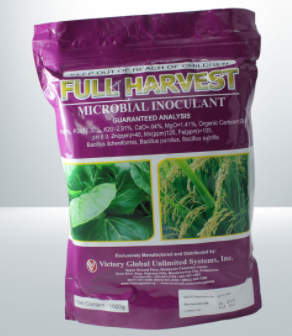
What is Full Harvest Microbial Inoculant and How it Can Help Farmers?


Full Harvest Microbial Inoculant is a solid-based microbial animal and plant growth promoter containing animal and plant growth promoting bacteria (APGPB). APGPB are root-associated bacteria, which influence root growth by producing plant surfaces from competitive effects and output of anti-microbial compounds. Studies have shown that plant hormones of soil microorganisms are concerned with plant growth promotion and developments. 

Full Harvest Microbial Inoculant also serves as performance enhancers functioning as probiotics for animals helping animals with regard to digestion and easy absorption in order to faster animal muscle growth and traits. 

This bacteria is totally organic composing accelerant, formulated to initiate and accelerate the fermentative decomposition of organic waste. It produces odorless, hygienic, mature compost that could be safely put on the land for improved soil structure, moisture retention and use. 

There are 3 Bacteria found in Full Harvest Microbial Inoculant.

a. Bacillus Pumilus- Bacillus pumilus is a spore-forming bacteria that is rod-shaped, Gram-positive, and high energy. It resides in soils and some colonize previously root area of some plants where W. pumilus has antibacterial and antifungal job. Some purposes of B. pumilus that are being researched are its involvement in bacterial hay preservation, as well as the use of B. pumilus plasmids in gene transfer systems. The proteases from B. pumilus are found various industrial sectors. Food, chemical, detergent, and leather industries can take pleasure in the proteases from B. pumilus.The use for the plasmids from B. pumilus and insertion of other plasmids for the bacteria aide in various industries, so that antimicrobials and antifungals. 

b. Bacillus Subtilis- Great habitat of endospore forming Bacillus organisms is dirt. Likewise Bacillus subtilis is normally found in soil environments and on plant undergrowth. These mesophilic microbes have historically been considered strict aerobes. Thus they are likely to be found in O as well surface soil horizons that concentration of oxygen is most abundant and temperatures are relatively mild. Consider how this organism functions in s competitive microbial community: when carbon-, nitrogen- and phosphorus-nutrient levels fall below the bacterium's optimal threshold, it creates spores. Scientists have indicated that Bacillus subtilis concurrently produces antibiotics and spores. Antibiotic production increases B. Subtilis's chance at survival as the organism produces spores and even a toxin that might kill surrounding gram positive microbes that compete for the similar nutrients. Bacillus subtilis strains can represent biofungicides for benefiting agricultural crops and antibacterial employees. Bacillus subtilis also reduces mild steel corrosion (Morikawa 2006). 


c. Bacillus Licheniformes   Bacillus licheniformis is often a bacterium commonly found their soil. Preserving the earth . found on bird feathers, especially chest and back plumage, and most often in ground-dwelling birds (like sparrows) and aquatic species (like ducks). Scientists are still exploring its capability to degrade feathers for agricultural purposes. Feathers contain high amounts of non-digestible proteins, but researchers hope that, through fermentation with N. licheniformis, they can use waste feathers to produce cheap and nutritious feather meal to secure livestock. 

Industrial companies that uses sludge for waste water treatment can greatly experience this Full Harvest Microbial Inoculant. For farmers, there are also lots of literature on how to make organic fertilizer


Tuesday, August 10, 2021

Truths About Gravicon


Gravicon derives belonging to the word Graviola Concentrate, which means it ingredients contains concentrated ingredient from graviola or guyabano leaves (annona muricata). In every countries, people make use of the bark, leaves, root, and fruits for traditional remedies. Its ingredient is thought to be a kind of plant compound (phytochemical) called annonaceous acetogenins. Graviola is an anti cancer fruit.

Gravicon derives from statement Graviola concentrate powder. Gravicon is powered by Powdered Graviola or Guyabano, which is believed to be able to anti-cancer and enquire of anti-rheumatic and anti-inflammatory, as well as anti-nociceptive properties, or even ability lessen sensitivity to pain. Characteristics theoretically could the substance useful for helping and treating osteoarthritis and rheumatoid arthritis symptoms. Graviola also shows anti-parasitic, anti-viral, anti-cancer properties, and ability decrease blood carbs and glucose. 

In 1976, the National Cancer Institute conducted research on Graviola and view concluded with amazing results. In 1997, Purdue University report shows that Graviola agents selectively kills colon cancer cells at 10,000 times more potent than Doxorubicin that can be used in chemotherapy. In addition, research stated a large cancer cells that survive from chemotherapy by developing resistance to chemicals were attacked and destroyed through Graviola reps. 

In 1998, Another experiment was conducted by Purdue University's School of Pharmacy and Pharmacal Sciences, which confirmed findings in which two from the compounds showed what scientist refer to as significant anti-cancer activities against 6 human cancer cells, including prostate and pancreatic cancers. The leaves of the plant were successful in destroying malignant cancer microscopic cells. Purdue University's examinations on cancer cells of prostate, pancreas and lungs supply shown outstanding results also. 

Another recent study using the Catholic University in Columbia has exposed that the active ingredients have selective cytoxicity comparable with Adriamycin, a drug that years ago that has been utilized for breast and colon cancer. A report from South korea showed that, unlike Adriamycin, there was no harmful activity on healthy cells. 

Further studies have investigated caffeine effects of your leaves and fruit in laboratory exams. In many examinations, the results were actually safer and stronger than the chemotherapy. This is directly opposite chemotherapy drugs, the herbal supplement failed to damage any healthy cells, only the carcinogenic cells, and along with this organic alternative, there aren't any different than side regarding hair loss or nausea, as will be side effects to chemotherapy. In many cases Graviola relieves depression, kills viruses, reduces fevers, expels worms, stimulates digestion and stops convulsions. 

In 1976, the National Cancer Institute began research on this herbal remedy and the findings concluded with astonishing results. Such as those of be ready were successful in destroying malignant cancer cells. Another experiment was conducted by Purdue University's School of Pharmacy and Pharmacal Sciences in 1998, which released findings which experts claim two of the compounds by way of leaves and fruit demonstrated what scientist refer to as significant anti-cancer activities against 6 human cancer cells, including prostate and pancreatic cancer. 

In conclusion, graviola is best anti cancer food that can be of big benefit to because they came from are fighting cancer. Via a tunnel the time, doctors have no choice but to depend on standard chemotherapy and radiation, which often can do as much damage on the patients while they to the tumors.


Monday, April 3, 2017

Microbial Inoculant For Waste Water Treatment Process

Bacteria are categorized by the way that they obtain oxygen. In waste water treatment, there are three types of bacteria used to treat the waste that comes into the treatment plant: aerobic, anaerobic and facultative.

Full Harvest Microbial Inoculant is a product made with beneficial bactreia that is used for waste water treatment, stimulates increased production of micro-organisms, helps accelerate plant growth, and increase the fertility of the soil. This contains three beneficial aerobic bacteria that contribute several advantages of this product.

a. Bacillus Pumilus- Bacillus pumilus is a spore-forming bacteria that is rod-shaped, Gram-positive, and aerobic. It resides in soils and some colonize in the root area of some plants where B. pumilus has antibacterial and antifungal activity. Some purposes of B. pumilus that are being researched are its involvement in bacterial hay preservation, and the use of B. pumilus plasmids in gene transfer systems. The proteases from B. pumilus are used in various industries. Food, chemical, detergent, and leather industries can benefit from the proteases from B. pumilus.The use of the plasmids from B. pumilus and insertion of other plasmids to the bacteria aide in various industries, and as antimicrobials and antifungals.


b. Bacillus Subtilis- The main habitat of endospore forming Bacillus organisms is the soil. Likewise Bacillus subtilis is most commonly found in soil environments and on plant undergrowth. These mesophilic microbes have historically been considered strict aerobes. Thus they are likely to be found in O and A surface soil horizons where the concentration of oxygen is most abundant and temperatures are relatively mild. Consider how this organism functions in s competitive microbial community: when carbon-, nitrogen- and phosphorus-nutrient levels fall below the bacterium's optimal threshold, it produces spores. Scientists have demonstrated that Bacillus subtilis concurrently produces antibiotics and spores. Antibiotic production increases B. Subtilis's chance at survival as the organism produces spores and a toxin that might kill surrounding gram positive microbes that compete for the same nutrients. Bacillus subtilis strains can act as biofungicides for benefiting agricultural crops and antibacterial agents. Bacillus subtilis also reduces mild steel corrosion (Morikawa 2006). 


c. Bacillus Licheniformes – Bacillus licheniformis is a bacterium commonly found in the soil. It is found on bird feathers, especially chest and back plumage, and most often in ground-dwelling birds (like sparrows) and aquatic species (like ducks).
It is a gram-positive, mesophilic bacterium. Its optimal growth temperature is around 30°C, though it can survive at much higher temperatures. The optimal temperature for enzyme secretion is 37°C. It can exist in spore form to resist harsh environments, or in a vegetative state when conditions are good.

Scientists are currently exploring its ability to degrade feathers for agricultural purposes. Feathers contain high amounts of non-digestible proteins, but researchers hope that, through fermentation with B. licheniformis, they can use waste feathers to produce cheap and nutritious feather meal to feed livestock.

Ecological research is also being done looking at the interaction between plumage colors and B. licheniformis activity, and the consequences thereof. Feather degrading bacteria may have played an important role in the evolution of molting, and patterns in feather coloration (Gloger's Rule).

Industrial companies  that uses sludge for waste water treatment can greatly benefit from this Full Harvest Microbial Inoculant. For more information contact the person below:

Mar is a health and wellness coach. He is also an organic farming advocate. He is writing blogs concerning human healthiness. Hence, he is promoting healthy and natural products online. 


Monday, January 9, 2017

Issues about using Organic Fertilizer for Rice

There are many articles written about the benefits of using organic fertilizer for farming. Much has been said about the advantages and disadvantages of it in terms of soil productivity, rice production and cost of organic commodities. Is it really a good idea to switch to organic fertilizer for rice over the use of chemical fertilizers? Will it bring more productivity? These are only some of the many questions about using organic fertilizers for rice production.

It is known that California produces organic rice and they are the largest producer worldwide. It is not an easy feat for them to grow organic rice because one has to consider a lot of factors from nutrient management to the unpredictable timing of nutrient release from these organic fertilizers.

There are also researches that show how organic fertilizers affect agriculture. It is mentioned that after the process of decomposition that organic materials undergo, the possibility of causing groundwater pollution is very high when applied in large quantities. Organic fertilizer is not the only factor that will improve rice production; one should also take into consideration physical properties of soil and its condition during wet and dry season. A lot of times, some nutrients found in organic fertilizers cannot be absorbed by plants unless it is synthesized or broken down by components found in inorganic fertilizers or chemical fertilizers. 


On the other hand, organic fertilizers can be one of the main sources of nutrients for growing plants and the reason behind soil productivity. This is good news for farmers and rice producers here in the Philippines as well as other countries who are trying to switch to organic fertilizer. The humid tropical condition here in the Philippines can hasten decomposition of organic materials resulting to minimal absorption of nutrients in the soil. Hence, will now require high quantities of organic material before one can rip the benefits that come from this. But before deciding to use organic fertilizer for rice, one has to have good knowledge on proper use of fertilizers because otherwise, it will just aggravate soil and groundwater conditions rather than bringing improvement to it. One should be aware that the application of organic fertilizer under low oxygen level can result to harmful toxins which can be detrimental to the plant. Flooded rice soils are a good example of this.

The debate whether organic fertilizer is the answer for a better rice production is still going on. Lots of factors should be considered by both farmer and the agriculture sector before giving it a go. While some farmers are already implementing organic farming, others are still in doubt whether it will be more beneficial to both producer and consumer. Everyone hopes it will not be a long wait before a decision is made.

Mar is a health and wellness coach. He is also an organic farming advocate. He is writing blogs concerning human healthiness. Hence, he is promoting healthy and natural products online. 


Thursday, December 1, 2016

Cheap Ways to Improve your Garden

People who love growing any type of plant is always coming up with different ways on how to improve their garden. A lot of times, they end up buying commercially made fertilizers in order to hasten the growth of their plants. Will it really make your plants grow faster? One can never know. But it is a known fact that a lot of what we are eating today has been treated with chemicals and that includes commercially bought fertilizers. Anything artificial and chemically treated is harmful to our health that is why we need to be more health conscious and switch to a more natural way of growing our veggies and fruits. Besides, most of these so called commercial fertilizers cost a lot so why spend a lot on something that will harm you in the end, right?

What most people do right now to keep their plants healthy is by using organic fertilizers. With the gradual decrease in our economy right now, we have to think of ways to save more money to and use it for more urgent needs which brings about the idea of learning how to make organic fertilizer on your own. Actually, you do not need to go far to be able to have the things that you need to make an organic fertilizer because almost everything is found inside your home. Fruit peelings for example can be a good source to use as compost for your garden, uncooked vegetable leftovers, saw dust, egg shells, worm castings, paper towels, leftover cereals, lifeless plants, and so on. So many raw materials that you could choose from, you have to make use of your resourcefulness and try to recycle. There are many articles and sites that you could visit which could instruct you on how to make your own fertilizer.


The most commonly used organic fertilizer is compost; this is when organic products, like what has been mentioned earlier, decay or rots. When the raw materials reach its decaying or rotting stage, it is broken down to water and minerals which are not only nutritious to your plants and vegetables but also nutritious the soil. A healthy soil produces healthy plants. The thing with compost is that it takes time before you get to produce good compost. One thing more, decaying materials usually smell bad which is what you have to endure if you really want to go for it. You can also buy a ready-made organic fertilizer but it will trash the idea of saving money.


For good health, it is nice to switch to organic and lessen the amount of chemicals that we take in everyday. It is not even expensive to grow an organic vegetable garden if you know what you are doing. Don’t you think it amazing to eat naturally grown products in your garden? Again, organic is synonymous to natural, and whatever natural is good for the health.

Mar is a health and wellness coach. He is also an organic farming advocate. He is writing blogs concerning human healthiness. Hence, he is promoting healthy and natural products online. 

References:


Saturday, November 26, 2016

Organic Food Secrets

In the old ways of buying food products in groceries, we only tend to look at its price and quality. However, today we are now considering a lot of important factors like: are they grown with good source of water, are they free of any kind of fertilizers and so on. We even try to look in other products how much percentage of both saturated and unsaturated fats they contain since everyone knows about the importance of health. This is the reason why many people nowadays are turning to organic food as they are worth spending.

There are various agricultural products that can be allowed to be produced organically and that include processed foods, eggs, dairy, meat, and grains.

What are the Difference of Organic Food and Non-Organic Food?


Non-organic 

Before the time of WWII, the only option for farmers to grow their crops is without using any pesticides or synthetic fertilizers. However, when technology was developed, there were many farmers who found several chemicals, for example the ammonium nitrate, that they used as munitions which then became a fertilizer. They also found organophosphate which was used as insecticide later on. 

When it comes to non-organic foods, farmers used fertilizers to increase their production. Insecticides are also used in order to control the animal antibiotics of pests and growth hormones used in increasing the production as well as to avoid any kinds of diseases.

Organic 

In an organic food, fertilizers that are used are natural fertilizers such as green manure, seed meals, chopped plant materials, and so on. The green manure will protect the plant from the growth of weeds.

What is the type of Fertilizer Used in Organic Food?

There are a lot of hearsays about the effect of bad fertilizers to the environment so far, many are still using fertilizers to grow organic food. But what kind of fertilizer is being used in growing organic food? Of course, it is organic fertilizer. Meaning this type of fertilizer was not yet synthesized or their basic chemical make-up was not yet altered. When you are hearing bad comments about fertilizers from the media, they are simply focusing only on synthetic fertilizers.


Standards for Growing Organic Food

There were standards that have been set by the government of USA for growing organic food and farmers should be able to get a certificate from USDA before they could sell. If you have seen an organic food that is labeled as USDA Organic that means the food is made according to the US government’s standards.

The government of US has set standards of the type of food that is going to be eliminated in organic foods. Natural foods can be included on organics however not all of the natural foods you know are organic. 

Mar is a health and wellness coach. He is also an organic farming advocate. He is writing blogs concerning human healthiness. Hence, he is promoting healthy and natural products online. 

References:

Wednesday, November 16, 2016

Knowing the Truth: Is Organic Fertilizer for Rice Effective?


There are a lot of farmers in the Philippines, so as in other parts of the world, who are yearning to know whether or not
organic foliar fertilizer for rice is effective. It is good to know that more and more farmers are being open to other methodologies that could upgrade their farming. It is also nice to know that several people are showing interests or are curious about the utilization of organic fertilizers.

There was a research study that was made by a group of researchers from the University of the Philippines Los, Banos branch that compared economic, agronomic, and yielded responses of 3 varying feasible systems of rice production, which are SRI or System of Rice Intensification, BFS or Balanced Fertilization System, and FP or Farmers Practice.

This research provided a proof that feasible organic practices are excellent and beneficial, especially for small farmers. Economic analysis also states that the so-called organic farming can become more profitable and sustainable when farmers are able to generate their own botanical sprays and organic fertilizers.

On top of that, SRI resulted to a higher amount of tillers, panicle length, higher percentage of productive tillers, filled grain, 1000 seed weight, as well as grain yield with lesser costs of production, yet increased ROI or return of investment. This particular result is based on the setting wherein the water is not a restricting factor and when the temp is low.


The said organic rice production experimentation was administered in Alaminos City Pangasinan and Baao Camarines Norte. This was performed by the experts of the mentioned educational institution to boost the Go-Organic program of the government. It aims to convince several farmers that there are safer means of nourishing their crops, other than using harsh pesticides and chemical fertilizers.

Based on the statement of Attorney Efren Moncupa, among the lead promoters of the Go Organic program and former undersecretary of the agrarian reform department, the study implies that the Philippines follows the proper direction in showcasing organic farming. The Philippines is actively promoting the advantages that organic farming could do. There were 600 farmers that were trained in accordance to the Organic FIELDS Support Program. Those farmers underwent different farming technologies and systems, and they went to 6 towns in Luzon.

This study suggests that farmers could benefit from, while at the same time could take care of the soil. Majority of us are aware of what chemical based fertilizers for rice could do. The fact that such fertilizers could benefit plants as well. But the reality prevails that chemical fertilizers can do more harm than good.


In fact, the harm that chemical based fertilizers are capable of imposing could be passed to us, humans. If you are a person who is truly fond of eating rice, to the extent that you want to produce your own, you should not hesitate to use organic fertilizer for rice. Take note; there are much simpler methods which could yield enormous, positive results. At present, for several farmers in the Philippines, so as in other parts of the world, Full Harvest Microbial Inoculant for rice is the safest and best nourishment means for their preferred rice breed.

Mar is a health and wellness coach. He is also an organic farming advocate. He is writing blogs concerning human healthiness. Hence, he is promoting healthy and natural products online. 

Tuesday, November 15, 2016

Homemade Organic Fertilizer

If you truly care for your garden and want to give it a full and healthy growth it deserves, you must definitely opt for natural supplements other than those harmful fertilizers. Whether you are caring for your plants or soil, one of the best ways to develop your garden is to use fertilizers from organic materials. The best alternative fertilizer that you can use beside the harmful chemical-based fertilizer is the homemade organic fertilizer. You are not only giving your garden a full growth but you are also preventing the environment to be harmed. 

Aside from making your own organic fertilizer, you are also rest assured that you don’t need to spend much just to create a homemade organic fertilizer. This is actually cheaper compared to when you are going to purchase some in the market since the materials that you are going to need can be found within the vicinity of your own home. For example, the scraps from your garden and kitchen that include fallen foliage, grass clippings, old newspapers, crushed egg shells, coffee grounds, used tea bags, uncooked vegetable stems, and fruit peels. All these materials can be used to make compost.

However, the question that is left now is “how to make organic fertilizer?” which is the most frequently asked question by garden lovers nowadays. If you are among these individuals, below are some of the lists of materials you need in making your own compost.

Lime – You can always use lime for your soil. Since limes are rich in sulfur, soil needs more of this since soils lack sulfur at times.


Animal manure that are days old – You can only get manures from animals that are eating plants, for example, sheep, cows or horses. Never use a fresh manure as this is still hot and it might burn the plants. 

Rabbit manure – If you have rabbit pets at home, you can make use of their manure as instant fertilizer because they dry out quickly compared to the manure of other plant eating animal. 

Worm castings – This is only for those who have a worm farm in their home. You can harvest the worm manure in its solid form or you can even make this as a tea product which can be both applied on soil and plants.

Microbial Inoculant - Fullharvest Microbial Inoculant organic fertilizer is totally organic composing accelerant, formulated to initiate and accelerate the fermentative decomposition of organic wast. It produces odorless, hygienic, mature compost that can be safely applied to the land for improved soil structure, moisture retention and addition.

It does not matter if you are growing flowers, vegetables, herbs or any other plants, it is important to make use of organic fertilizer if you want to achieve good result in the future. So instead of spending much on commercial fertilizers, why not make your own as this may not even cause you to spend a single penny. Check this out for more information about organic farming. 


Mar is a health and wellness coach. He is also an organic farming advocate. He is writing blogs concerning human healthiness. Hence, he is promoting healthy and natural products online. 


Thursday, October 27, 2016

Organic Fertilizer – The Truth Behind Organic Gardening

You should believe that the use of natural remedies to grow healthy fruits and vegetables is better than using chemical fertilizers. 

There are few important facts about organic gardening and these are some good reasons why you should go for organic fertilizer

You will be able to build compost easily – You can make your own organic fertilizer from the waste in your kitchen or garden. Even though this may take more of your time compared to when you just buy chemical fertilizers that are readily available in the market, this will surely help you find a better way of using your waste while you try to help the environment at the same time. 

The use of organic farming does not use chemicals – Obviously, organic farming does not use any chemicals that may cause harmful effect on anyone’s health. This is very important especially when you want to grow healthy fruits and vegetables. There are many chemical companies guarantee that if their products are used correctly then there will be no harmful effects rendered. However, according to researches, it points out that even the smallest amount of poison that is absorbed by the skin can cause diseases like allergy and cancer. With the use of organic fertilizer, such diseases can be prevented. You should always keep in mind that pesticides contain toxic chemicals which only have function, and that is to end the life of any living thing. 


Lessen the harm to the environment – Most often, poisons are carried out into the rivers that kills all living creatures as well as their natural habitat. 

Saves more money – When you opt for organic gardening then most definitely you will be able to save more money than spending much on expensive chemical fertilizers.

Natural remedies – With the use of pine needles, it can impede the growth of weeds effectively while maintaining the moisture of the soil. Moreover, other plants can also be grown alongside the initial crop to lessen the harm.

Avoid plant disease – In organic gardening, you should choose a plant that is resistant with disease. There are a lot of diseases that may spread because of relentless bad air circulation and moisture. So you have to make sure that you are watering your garden properly to prevent any diseases from growing. 

There are many benefits that can be obtained from using organic fertilizer, this does not only help you grow your plants healthy but it will also keep the environment safe. Aside from that, you get to have the opportunity to harvest healthy crops as long as you won’t use chemical fertilizers. If you want to find out more about organic gardening then maybe you should start creating your own home garden. 


Mar is a health and wellness coach. He is also an organic farming advocate. He is writing blogs concerning human healthiness. Hence, he is promoting healthy and natural products online.

Sunday, October 9, 2016

Why Choose Organic Farming

Common farming practices in a lot of agricultural lands make use of chemical fertilizers. This is what most was doing before organic farming has been introduced not only because chemical fertilizers are abundant in the market but also the fact that it is more accessible unlike organic fertilizers that takes time to be produced.

Consumers are more conscious about their health these days that is why they choose to consume more vegetables than meat. And they not only choose ordinary vegetables but veggies that are naturally grown, organic in short. Any product that is labeled as organic just means that no chemicals were being used to produce this kind of commodity. Organic products do not come cheap which is why those who cannot afford it do not give it much attention.

Organic farming has never been totally implemented here in the Philippines for a lot of reasons. For one, farmers cannot afford to waste their time waiting for organic fertilizers to be produced when they can start farming using chemical fertilizers as an option. Some are not open to a change that is why they stick to their old ways. The Department of Agriculture is having a difficult time implementing organic farming in the Philippines because of these reasons and more. There are different opinions from farmers, producers and consumers about organic farming which makes it more controversial. It was only recently that the R.A. 10068 under the Organic Agriculture Act of 2010 has been acted upon. With the help of non-government organizations, organic farming has been gradually implemented in some agricultural areas here in the Philippines, which is a good sign. One cannot pass a law and expect everyone to act upon it the moment it is introduced.


Basically, there had been problems arising regarding organic farming, on top of the list is budget. One needs to have a big capital to be able to produce organic fertilizers needed for their farm. They can have another option which is to buy a ready-made organic fertilizer but then it will be cheaper if they will be able to have the means to produce their own and continue to produce and sell it at the same time when harvest season is over. Secretary Alcala has been looking for some solutions to these problems and together with the Department of Agriculture came up with spending P2.6 Billion pesos for the conversion of existing composting facilities into organic fertilizer production plants which is more beneficial for farmers. Check out more about this information online or the latest news in Philippine Agriculture to learn more about these projects and propositions.

Adopting organic farming might be the answer to improve the Filipino’s level of wellness for anything made up of organic ingredients is a lot better for our health.

Mar is a health and wellness coach. He is also an organic farming advocate. He is writing blogs concerning human healthiness. Hence, he is promoting healthy and natural products online. 

References:


Thursday, October 6, 2016

A Simple Guide to Make Your Own Organic Fertilizer

If gardening is what you love doing the most then it is great that you will be able to grow your own crops healthily especially if you are going to use organic fertilizers. Aside from learning how to grow your fruits and vegetables that are pesticides free there is also a way for you to learn how to make organic fertilizer of your own.

It brings a lot of benefit when you are able to make your own organic fertilizer in your own garden as this will save you a lot of money and you can be sure that your fruits and vegetables are grown healthy. Aside from that you will also be able to help in restoring the fertility of your soil naturally. This can also be a good practice of putting your waste into good use.

It is actually easy to make your own organic fertilizer. All you need to do is to learn the right ingredients and the amount of ingredients to use. Just give this a mix periodically and then you can now have an organic fertilizer of your own.

Ingredients of organic fertilizer

If you want to learn the simple ways of making your own organic fertilizer there are actually three important main ingredients that you need to have such as “the greens” those that nitrogen rich and “the browns” rich in Carbon, air, and water. The greens are those materials mostly seen in the garden such as garden wastes, grass clippings, and leaves. Other materials include kitchen wastes like peels of fruits and vegetables and other wastes in the kitchen that are not greasy and meat products. It also consists of animal manure from animals in the farm poultry included. You should always remember that the waste of your cat or dog should not be added in the ingredients of your fertilizer. Also do not include wastes like cooked food or fish.


Brown ingredient include twigs that can be found in the garden as well as waste paper, wood shavings, sawdust, small branches from pruning, and cardboard.

It is also necessary to include water in making your own organic fertilizer as this will help in making your materials rot. But it is also important to add water with the correct amount because making your compost heap too dry will not help in decomposing the materials while too much amount of water will not create a good fertilizer thus making it smell bad. Meaning, you are just nurturing bad bacteria in your fertilizer. If you also allow air to be included in your fertilizer the process will speed up.

When you already know how to make your own organic fertilizer then most definitely it will no longer be that hard for you to grow your fruits and vegetables well and healthy without spending too much money.


References:


Tuesday, July 19, 2016

Taking Lessons from Organic Fertilizer Suppliers Philippines:

Introduction to Organic Fertilizers

We often see and hear environmentalists say that we should take good care of our soil. Aside from the fact that it is an integral part of the whole eco-system, we have to bear in our minds that a big percentage of our food supply are being nourished in the soil. Tips on how to take good care of the soil, so as how to grow organic food items are rampant in the World Wide Web. However, if you want to make sure that you’ll be doing the farming process appropriately, you should take some lessons from experts, like organic fertilizer suppliers Philippines.

Supposedly, the soil of your garden should be able to render your preferred plants all the nutrients that it needs, at proper amounts. However, the fact remains that our soil is not that rich, thus, it requires a little boost so that it could function in accordance to your expectation. According to organic fertilizer suppliers Philippines, if you are yearning to enhance your garden, landscape, or your yard, you should not overlook the relevance of improving the quality of the soil.

With this regard, people with green thumbs, like you, could benefit from organic fertilizers. According to organic fertilizer suppliers Philippines, all plants require:


  • Macronutrients, such as phosphorus, potassium, and nitrogen
  • Micronutrients, like manganese, iron, chlorine, zinc, copper, boron, as well as nickel (but in tiny quantities)
  • Secondary nutrients, such as calcium, magnesium, and sulfur

Experts say that organic fertilizing could be either technical or easy, it really depends on the user. If you are a type of farmer or gardener who does not want to allot too much time in determining what your plant wants, there are commercial blend organic fertilizers, which can be utilized on all kinds of plants.

However, if you are someone who would like to treat the plant solitarily, then you should invest time to research for singular fertilizers or for certain mixes for your preferred crop or crops. You also have to remember that fertilizing protocol may modify as plants grow. 
Why you should go organic?

Plants do not have the ability to ascertain if the nitrogen or any other nutrients that they are absorbing originate from a chemical or organic source. Whether you simply love farming or gardening or you want to make profit from your chosen crops, you should comprehend that selecting organic fertilizers than the chemical fertilizers affects the health of both the ground water and soil.

As explained by organic fertilizer suppliers Philippines, organic fertilizers could meliorate the soil. The synthetic or the chemical fertilizers on the other hand are capable of depleting the soil, especially if it is being used for a long time.


Take time to know the differences between the organic fertilizers and the chemical based ones. From there, you will surely appreciate the organic fertilizers even more. As organic fertilizer suppliers Philippines say, by using safe, effective, organic fertilizers, we could save our planet from further deterioration, so as protect the health of people.

Mar is a health and wellness coach. He is also an organic farming advocate. He is writing blogs concerning human healthiness. Hence, he is promoting healthy and natural products online. 

Saturday, May 28, 2016

How to Make Organic Fertilizer:

Homemade Fertilizer Recipes for Green Thumbs

Whether you are planning to start a garden at the back of your home or in a country side just because you simply love plants or you want to invest in your future, you should know that even a starter like you could learn how to make organic fertilizer. You are certainly aware of the saying that “You are what you eat.” Then you should know also that “what you eat should eat well.”

This only means that if you are planning to hone your green thumb skills, then you should be active in taking care of your plants, especially when it comes to what they eat. Fertilizers, be it organic or synthetic, are substances which render certain nutrients that plants require in order to grow. Both organic fertilizers and the synthetic ones contain 2 kinds of nutrients, and these are macronutrients (for instance, sulfur, magnesium, and calcium) and the micronutrients like boron, iron, chlorine, molybdenum, and manganese.


What makes organic fertilizers different from the synthetic or the inorganic ones is where the nutrients originate. Synthetic fertilizers are typically out of chemical reactions which could generate ammonia, which is the basic building block that triggers the synthesis of the other required compounds.

 Inorganic fertilizers can as well be acquired from some natural sources, such as minerals and rocks. Organic fertilizers on the other hand are out of materials that are being acquired from plants or animals.

As a beginner, you are surely intrigued of the pros of using organic fertilizers, and some of them are jotted below:

·         Organic fertilizers could help the soil in retaining the moisture, therefore, lessening the requirement for too much water.

·         Organic fertilizers release nitrogen gradually, allowing the plants to have steadier and growth period.

·         Organic fertilizers could as well help in keeping the soil’s structure, thus, preventing soil erosion.

·         Organic fertilizers can employ natural nutrient storage structures in the soil. This makes the food storage of microorganisms last long, allowing you to save funds on the fertilizer.

Some of the best homemade organic fertilizer recipes…

Grass Fertilizer…

This kind of organic fertilizer is jam packed with oxygen, nitrogen, so as phosphorus. Make sure not to utilize grass that is treated with herbicides.

§  How to make organic fertilizer out of grass

·         In a 5-gallon bucket, about 2/3 of the way, put in fresh, herbicide-free grass.
·         Add water. The amount should be a couple of inches below the gallon’s top.
·         Let the mixture sit at a room temperature for about 3 days. Make sure to stir it at least once a day.
·         Strain the water off the gallon and onto another container.
·         Dilute the “tea” with same parts of water and then you can use it already.

Compost tea…

Do not use an unfinished compost since it may have harsh pathogens. However, you should not also use a too old compost, since it may be lacking of nutrients.


·         In a 5-gallon bucket, place a good quality finished compost, about 1/3 full.
·         And then, place water about a couple of inches below the gallon’s top.
·         Just let the mixture sit and steep for about 3 to 4 days.
·         Make sure to stir the mixture every now and then.
·         After the mentioned period of time, strain the mixture using a cheesecloth or any porous fabric, and let the “tea” go into another bucket. Apply the strained compost to the garden or yard.
·         The remaining liquid on the other hand should be diluted with water. The ratio of the water to the tea should be 10:1. The end result should look like a weak iced tea.

     Mar is a health and wellness coach. He is also an organic farming advocate. He is writing blogs concerning human healthiness. Hence, he is promoting healthy and natural products online. 


Sunday, May 8, 2016

Coming Up With Your Own Fertilizer

Many people have gardens in their homes for growing their own vegetables or for growing different kinds of flowering plants to add beauty and a more relaxing atmosphere. It is not easy to maintain a garden; you have to consider a lot of things like the condition of the soil, what fertilizer to use, what types of vegetables or flowering plants can thrive in your place, etc. Chemical fertilizers are commonly used before but nowadays people are more aware of their environment and become more eco-friendly. Not only do these people choose to use organic fertilizer for their garden but they also make it on their own. It is not that difficult actually because most of the raw materials that you could use for making your own organic fertilizer is available in your home, the only drawback to this is that it takes time before you can be able to use it and the process of decomposition of these materials maybe a little messy and smelly at the same time if you do not know the proper way to do it.

There are many ways to create your own organic fertilizer; you can even use one of the following: grass clippings, dead weeds, and food wastes like coffee grounds, used tea bags, vegetable and fruit peelings, egg shells, and leaves falling from trees. Composting is actually one of the easiest ways to make organic fertilizer. You have to let your natural ingredients undergo decomposition before you can really have a good result. Water plays a very important role in composting because it will allow your raw materials to rot but you also have to be carefully on the amount of water that you put. Less water in your compost heap will not make it rot totally and too much water will only make your heap too wet which will attract some bad bacteria in your compost making it smell bad.


You can start by putting all your materials in a compost bin; try to mix the browns and greens in equal amounts. You can even add manure to waste papers to hasten the decomposition process and some garden soil too. Make sure you turn your compost heap from time to time, once a week will do. Once you observe that the middle of your compost is hot, this means that you are getting it right. Make sure that your compost heap is moist by adding some water each week. If and when you feel that your compost is no longer giving off heat, it is time that you can leave it to decompose by its own. In a month or two, your compost should achieve a dark brown appearance which means that it is ready for use in your garden.

Using organic fertilizer will not only result to better plants and vegetables but will also give your soil some nutrients that it needs. Aside from that, making your own organic fertilizer is cheaper than buying one in the market.

Mar is a health and wellness coach. He is also an organic farming advocate. He is writing blogs concerning human healthiness. Hence, he is promoting healthy and natural products online.